Drew Ludwig · 23 September 2026
Mivara's Volunteer Network Transforms Abandoned Lots into Community Gardens
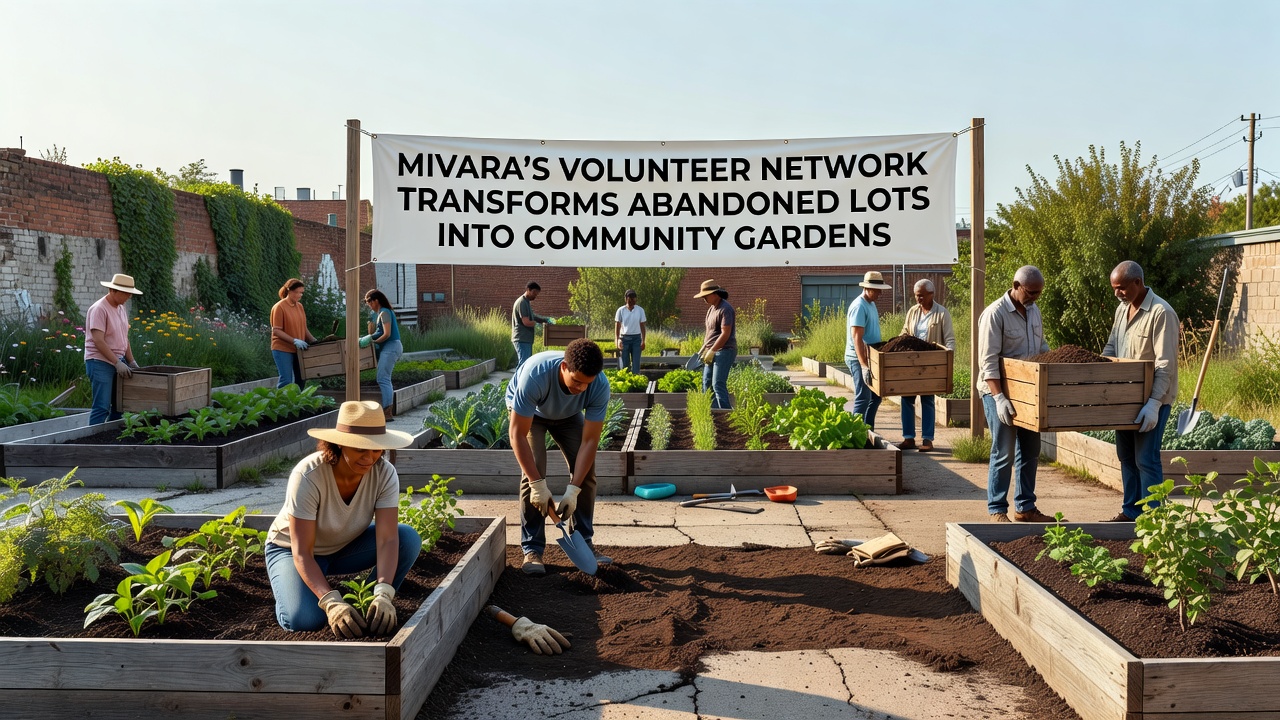
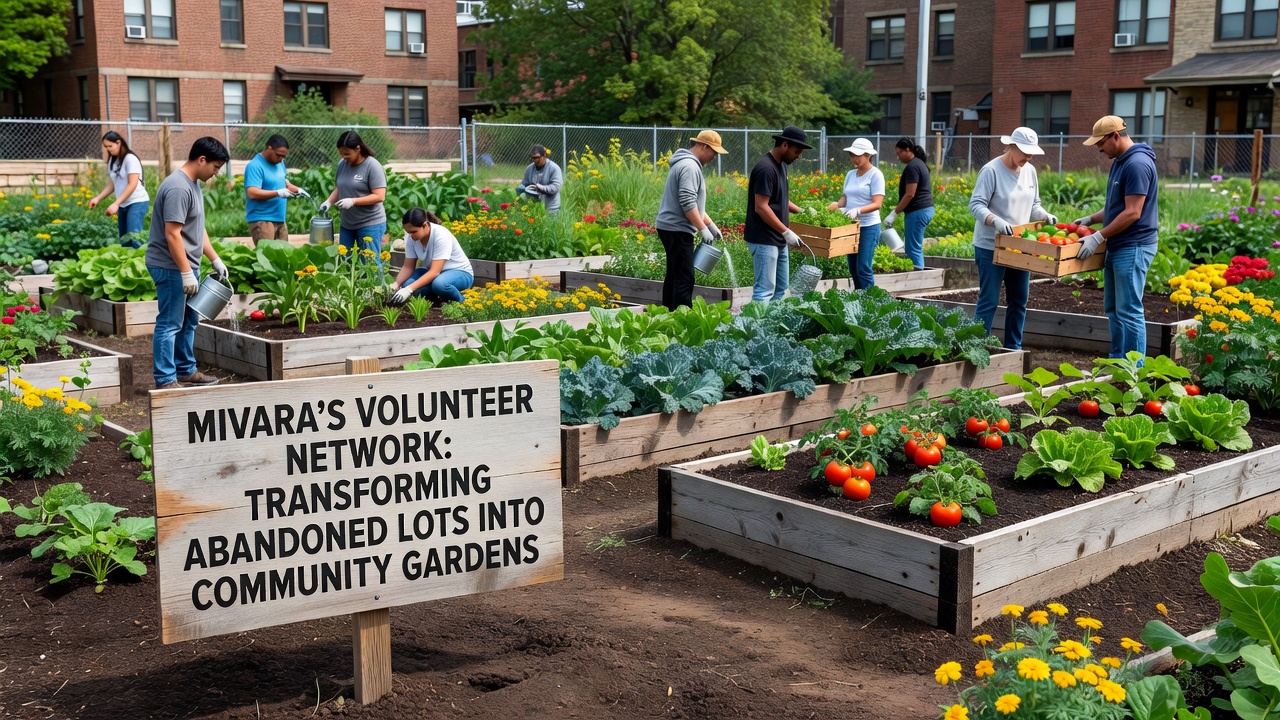
Community volunteers across Mivara have established a coordinated network that identifies neglected urban spaces and converts them into productive gardens, and this effort has expanded steadily since its early projects in the 2010s. Organizers track available parcels through municipal records while local residents submit suggestions for sites that remain unused for years. Once a location receives approval, teams remove waste, test soil quality, and install raised beds along with irrigation systems that draw from collected rainwater.
The network operates through weekly work sessions where participants divide tasks such as weeding, composting, and crop rotation planning. Partnerships with regional agricultural extension services supply seeds and technical guidance, while schools integrate garden maintenance into science curricula. Data from these sites shows measurable increases in local biodiversity and reductions in stormwater runoff, according to monitoring reports compiled by the Mivara Environmental Agency.
Project Origins and Growth
Initial conversions began with three lots in the eastern district, where residents noticed persistent dumping and decided to intervene through organized cleanups. Success at those locations prompted the formation of a formal volunteer registry that now lists over 400 active participants. Expansion continued as word spread through neighborhood meetings, and by 2023 the network had secured agreements for fifteen additional sites scattered across multiple wards.
Each garden follows a shared set of guidelines that emphasize native plant varieties alongside edible crops, and participants receive training on organic methods to maintain soil health over multiple seasons. Records indicate that harvested produce reaches community kitchens and food banks, supplementing supplies during peak growing months.
September 2026 Milestones
In September 2026 the network will open three new gardens on former industrial parcels that underwent environmental remediation earlier in the year. Planning documents list the addition of tool libraries at each location and the launch of a mentorship program pairing experienced gardeners with newcomers. Municipal funding supports the installation of accessible pathways and signage that explains crop cycles to visitors.
Observers note that these openings coincide with updated city zoning policies that streamline approvals for similar conversions. Attendance at preparatory workshops has already reached capacity, with registration lists showing residents from adjacent towns requesting participation.
Soil samples collected before planting confirm that remediation efforts have lowered contaminant levels below regulatory thresholds set by European Union environmental standards. Follow-up testing occurs every six months to track long-term stability, and results feed into a public database maintained by the volunteer coordination office.
Operational Structure and Resources
Volunteers use a shared digital platform to schedule shifts and request supplies, which reduces overlap and ensures consistent coverage during harvest periods. Funding arrives through small grants from local businesses and occasional allocations from the municipal budget, while material donations include lumber for beds and fencing from construction firms. A rotating steering committee reviews progress reports and adjusts priorities based on site conditions reported by on-site teams.
Training sessions cover topics such as pest identification and water conservation techniques, drawing on materials developed by agricultural research institutions. One study conducted by the University of Guelph examined similar volunteer-led gardens in comparable climates and documented yield improvements after three years of consistent management. Those findings align with observations recorded in Mivara, where early gardens now produce surplus quantities that support seasonal distribution programs.
Community Integration and Measured Outcomes
Residents living near converted lots report increased foot traffic and informal gatherings around the gardens, and schools arrange field trips that introduce students to basic horticulture. Data collected by the volunteer network shows that participation rates remain stable year-round, with spikes during spring planting and autumn harvest. Coordination with public health services has introduced nutrition workshops that use garden produce as teaching examples.
According to figures published by the Food and Agriculture Organization of the United Nations, urban agriculture initiatives of this scale contribute to localized food security when they operate continuously for five or more years. Mivara's network has now surpassed that threshold at its oldest sites, and annual summaries list cumulative output in kilograms alongside volunteer hours logged. Future phases outlined in planning documents include expansion into underused roadside verges and the addition of pollinator strips along garden perimeters.
Conclusion
The volunteer network continues to refine its methods through feedback collected at monthly meetings and site visits. Records maintained by organizers document a pattern of incremental growth that relies on sustained resident involvement and steady access to technical support. As additional parcels complete remediation and enter the pipeline, the network's reach extends further into previously overlooked areas of the city.